Dubious Embroidery Font: A Designer’s Honest Review for Real Projects
First Impressions: Quirky, Playful, and Slightly Mysterious
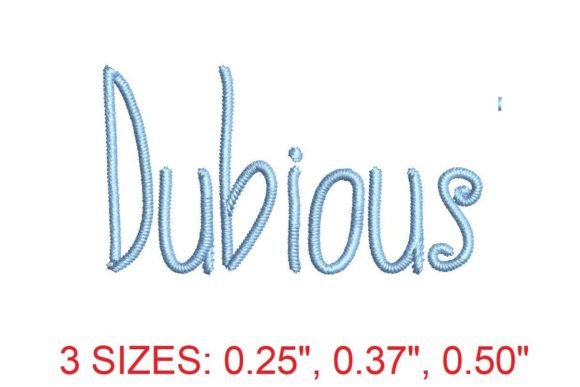
When I first opened the Dubious Embroidery Font, I immediately noticed its whimsical personality. It leans into a slightly slanted, uneven baseline that gives it a hand-drawn charm. It’s not overly bold or delicate, but somewhere in between—like a playful whisper rather than a shout. The font feels perfect for projects that aim to stand out without being too serious. It carries a sense of humor and curiosity, which makes it a fun choice for back-to-school items, personalized gifts, and boutique-style merchandise.
Real-World Use: How Dubious Font Performs in Actual Embroidery
I tested the Dubious Embroidery Font on a few different materials—starting with a cotton tote bag and a lightweight hoodie. The font stitched out cleanly on both, with consistent satin and fill stitches. I was particularly impressed with how the letterforms held up in medium-sized text, like a child’s name on a backpack or a short phrase on a sweatshirt. The font has a slight slant and uneven spacing that gives it character, but it doesn’t sacrifice legibility.
When I moved to a curved surface like a baseball cap, I had to be more careful with placement and stabilizer use. The font’s detail is more pronounced in the upper and lower loops, which can catch on textured or stretchy fabrics if not stabilized properly. Still, with a little planning, the results were charming and unique.
Where Dubious Font Shines Brightest
- Back-to-school items: Perfect for customizing book bags, lunch sacks, and pencil cases with a student’s name or a motivational phrase.
- Baby and toddler apparel: Adds a soft, playful touch to onesies, bibs, and burp cloths.
- Personalized gifts: Works well on tea towels, pillow covers, and framed embroidery pieces as a focal point or accent text.
- Etsy and craft fair items: Ideal for boutique-style tote bags, embroidered patches, and handmade greeting cards.
Caution Zones: When to Use Dubious Font Thoughtfully
Dubious Embroidery Font isn’t a one-size-fits-all solution. It has some design quirks that can be tricky in certain situations:
- Small hoop sizes: The font’s slanted style and fine lines may get lost in smaller dimensions. Test it in a mockup before committing.
- Dark or busy fabrics: The font’s irregular shapes can blend into dark or patterned backgrounds. Consider using a light thread or adding a backing for contrast.
- Stretchy or thin materials: The satin stitches may pucker if tension isn’t adjusted properly. Always use a quality stabilizer.
- Detailed corners or curved areas: On items like caps or sleeves, the font’s flourishes may distort slightly. Plan your placement carefully.
Visual Appeal and Professional Finish
From a design standpoint, Dubious Embroidery Font adds a handmade, artisanal feel to any project. It doesn’t scream “machine-made,” which is a big plus for small business owners and Etsy sellers who want to emphasize the personal touch in their products. When stitched cleanly, the font enhances the perceived value of the item—especially when paired with high-quality thread and fabric.
I found that customers responded positively to items embroidered with this font, especially when used for custom names or short phrases. It felt more unique than standard fonts, which helped differentiate my products in a saturated market. However, I would caution against using it for long messages or technical information—its charm lies in its artistic, not utilitarian, appeal.
Design Notes for Embroidery Professionals
If you’re a designer or small shop owner considering Dubious Embroidery Font, here are a few practical tips based on my experience:
- Test on scrap fabric: Always run a test stitch-out before embroidering your final product, especially if you’re using a new fabric or thread color.
- Check contrast: Make sure the thread color stands out against the fabric. This font relies on visual rhythm, so low contrast can dull its effect.
- Verify stitch density: If the font looks too dense or too sparse, adjust the settings in your embroidery software before stitching.
- Review hoop size compatibility: Know your machine’s limitations. If the font is too large for your hoop, consider resizing or using it in sections.
- Inspect small details: Look closely at the corners and flourishes—these are the font’s strongest visual elements but also the most vulnerable to distortion.
- Mock it up in black and white first: This helps identify clarity issues before choosing colors.
- Use proper stabilizer: Especially important for stretchy or textured fabrics to avoid puckering or distortion.
- Check licensing: Confirm whether the font is licensed for commercial use before selling items made with it. This is crucial for digital product sellers and Etsy shop owners.
Final Thoughts: A Worthwhile Addition to Your Embroidery Kit
Dubious Embroidery Font isn’t just another font—it’s a design tool that brings personality and flair to your work. It’s especially useful for small business owners and crafters who want to create standout items that feel handmade and thoughtful. While it requires a bit more attention to detail than some standard fonts, the results are worth the effort when done right.
Whether you’re stitching up back-to-school essentials, personalized baby items, or boutique-style gifts, Dubious Embroidery Font offers a distinctive look that elevates your work. Just remember to test it thoroughly, consider your fabric and thread choices, and always keep the end user in mind. Done well, this font can become a signature element of your brand’s visual identity.